If you are house hunting in Chandler, a pool can feel less like a bonus and more like part of daily life. In a desert climate with long, intense summers, many buyers want that ready-made place to cool off, relax, and entertain. The key is knowing that a pool home comes with its own set of costs, rules, and inspection priorities. Here is what to look for before you buy, so you can make a confident decision and move forward with clarity.
Why pools matter in Chandler
In Chandler, a pool is often both a lifestyle feature and a practical response to the climate. The city sits in the Sonoran Desert and warns residents about hot weather, dust storms, flash flooding, lightning, and strong winds during monsoon season. That local weather pattern shapes how outdoor spaces are used and maintained.
Pool homes are also common in the area. Realtor.com's April 2025 listing analysis found that 58.4% of listings in the Phoenix-Mesa-Chandler metro included a pool. That means when you shop for a home in Chandler, you are not looking at a rare luxury feature so much as a common option that needs careful evaluation.
What desert pool ownership really means
Buying a home with a pool in Chandler means thinking beyond weekend fun. In Arizona's dry climate, a pool requires regular attention to water loss, equipment, and cleanup. If you know that going in, it is much easier to choose the right home and budget realistically.
The Arizona Department of Water Resources says a standard uncovered Arizona pool can lose four to six feet of water per year to evaporation. Most of that loss happens during summer, when heat and wind are at their peak. Pools and spas also account for about 16% of outdoor water use, which makes water management an important part of ownership.
Evaporation is a real cost
Water loss in Chandler is not just about heat. ADWR notes that wind can sharply increase evaporation, and a 7 mph wind across the pool surface can raise evaporation losses by 300%. In monsoon season, that matters because strong winds and changing weather are part of normal life in Chandler.
Pool covers can make a major difference. ADWR says covers can save 90% to 95% of evaporation loss. If you are buying a pool home, it is worth asking whether the property already has a usable cover and whether the seller has used it consistently.
Routine maintenance goes beyond cleaning
Many buyers think first about skimming leaves or brushing the pool. In Chandler, you also need to consider water top-offs, backwash management, splash-out, and leak detection. ADWR specifically notes that backwashing, draining, splashing, and leaks all contribute to water loss.
Dust and wind add another layer. During monsoon season, a pool may need more frequent cleanup because of blowing debris and storm conditions. When you tour homes, pay attention to how protected the pool area feels and whether the yard design may help or worsen wind exposure.
Chandler pool rules to know
Before you buy, you should understand that pool compliance in Chandler is not just a general safety issue. It is also a local due diligence issue. Arizona has statewide requirements, and Chandler adds stricter local standards in several areas.
Under Arizona law, many residential pools deeper than 18 inches and wider than 8 feet must be enclosed by at least a five-foot barrier. The law also requires self-closing and self-latching gates that open outward, limits the size of openings, and restricts climbable features.
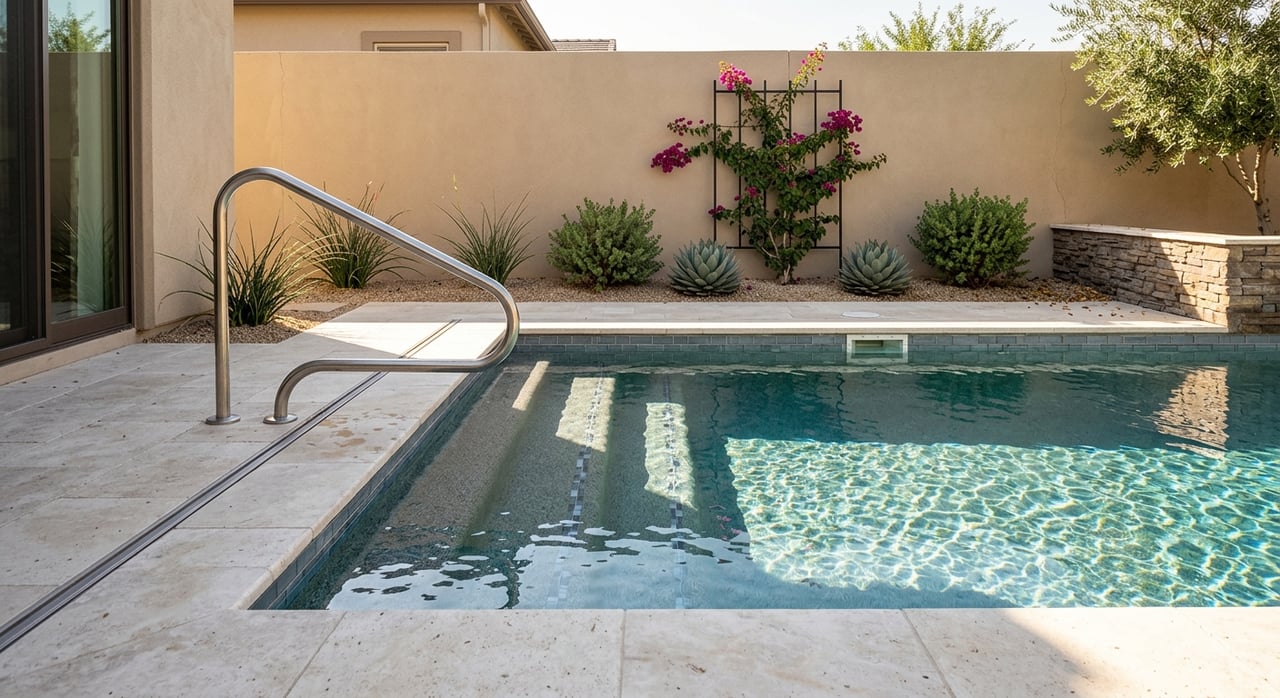
Chandler's local guidance goes further. The city says residential pools must be located in the backyard, not the front yard. It also says the water's edge must be at least five feet from side and back property lines, pool fencing requires a permit before construction, exterior barriers must be 6 to 7 feet high, and perimeter fencing must be masonry, concrete, or decorative fencing rather than wood.
Why compliance matters for buyers
A pool that looks great on showing day may still raise questions if fencing, setbacks, or permitting were handled incorrectly. That can affect your timeline, future repairs, resale, and peace of mind. It is smart to verify these details before closing rather than after you move in.
Ask for permit history, final approval documents, and any records related to pool and barrier work. If updates were made over time, you want to know whether those changes were properly completed and approved.
What to inspect before closing
A pool inspection should be more detailed than a quick visual check from the patio. The Arizona Board of Technical Registration's pool and spa standards say an inspection should observe the interior finish, decks, steps, coping, filters, pumps, motors, blowers, skimmer, drains, heaters, automatic safety controls, visible piping and valves, bonding, visible electrical components, underwater lighting, GFCIs, handrails, ladders, child-safe barrier provisions, and entrapment-prevention components.
That is a long list, but it tells you something important. A pool is a system, not just a feature. Surface condition, equipment age, electrical safety, and barrier compliance all deserve attention during your due diligence period.
Know the limits of a visual inspection
The same standards make clear that inspections are visual and limited to accessible components. That means even a solid inspection may not answer every question about repairs, hidden issues, or past workmanship. This is one reason service records matter so much.
Ask the seller for:
- Pool service records
- Equipment repair or replacement history
- Permit records
- Final approval documents for the pool and barrier
- Any known leak history
Those documents can help you understand whether the pool has been maintained consistently or whether deferred upkeep may be waiting for you after closing.
Insurance questions to ask early
A pool can change your insurance conversation, so it is best to bring it up before you are deep into the purchase. The Arizona Department of Insurance and Financial Institutions says homeowners policies protect against bodily injury and property damage claims. Because a pool can raise liability exposure, buyers should confirm how the home will be underwritten and whether higher liability limits or additional coverage should be considered.
This does not mean every pool home is difficult to insure. It does mean you should notify your insurer early and ask direct questions about how the pool affects coverage, limits, and available options. Getting those answers before closing helps you avoid surprises.
Do not overlook flood risk
In Chandler, another important issue is flood damage. DIFI notes that standard homeowners insurance does not cover flood damage. It also explains that monsoon runoff on Arizona's hard desert ground can be treated as flooding if it enters the home.
That matters when you evaluate the lot, yard grading, and drainage around the pool and patio. A pool and outdoor hardscape can affect how water moves across the property, especially during monsoon season. When you walk the home, look closely at drainage patterns and ask questions about past water intrusion or runoff concerns.
Does a pool help resale value?
A pool can support value in Chandler, but it is not automatic. Realtor.com's April 2025 analysis found that the typical home with a pool was listed at $599,000 and 2,450 square feet, compared with $389,000 and 1,850 square feet for homes without pools. That pricing gap does not mean the pool alone created the difference, since pool homes are generally larger.
The more useful local takeaway is that pools are common in the Phoenix-Mesa-Chandler metro, where 58.4% of listings included one. In other words, many buyers expect to see pool options. In some settings, that can make a pool feel like a competitive advantage, while in others it may simply be part of the standard feature set.
Condition matters more than the idea of a pool
Redfin's Phoenix-area reporting adds an important point. In some parts of the metro, a pool is highly valuable, while in others it can detract from value. The difference often comes down to condition, neighborhood expectations, code compliance, and whether the pool feels move-in ready.
For you as a buyer, that means a well-kept pool may be a real asset, while a worn or noncompliant pool can become a negotiating issue. A pool is not just about having one. It is about whether it adds ease and enjoyment or future expense.
Should you buy a Chandler home with a pool?
A pool home usually makes the most sense if you want immediate summer use, outdoor entertaining space, and plan to stay in Chandler long enough to enjoy the feature. In a hot desert climate, that can be a meaningful quality-of-life upgrade. It can also align well with how many buyers use and value homes in the area.
A no-pool home may be the better fit if you want less upkeep, fewer water and liability questions, and more flexibility for the yard. Neither choice is universally better. The right choice depends on how you plan to live in the home, how much maintenance you want to take on, and whether the specific pool has been cared for properly.
When you evaluate a Chandler pool home, the goal is simple: look past the sparkling water and make sure the property works for your budget, your lifestyle, and your long-term plans. If you want expert guidance as you compare homes in Chandler and across the East Valley, Jennifer Vandall - Main Site offers calm, tailored support to help you buy with confidence.
FAQs
What should you inspect when buying a Chandler home with a pool?
- You should review the pool surface, decking, steps, coping, pumps, filters, drains, heaters, lighting, visible electrical components, safety barriers, and available service and permit records before closing.
What are Chandler pool fence requirements for homebuyers to know?
- Chandler says residential pools must be in the backyard, require permitted fencing, need exterior barriers that are 6 to 7 feet high, and use masonry, concrete, or decorative fencing rather than wood.
How much water can an Arizona pool lose each year?
- The Arizona Department of Water Resources says a standard uncovered Arizona pool can lose four to six feet of water per year to evaporation, with most of the loss happening in summer.
Does a pool affect homeowners insurance in Chandler, Arizona?
- Yes, a pool can increase liability exposure, so you should ask your insurer how the pool affects underwriting, liability limits, and any optional coverage.
Is buying a Chandler home with a pool worth it?
- A pool can be worth it if you want immediate use, outdoor living space, and plan to enjoy the home long term, but it may be less appealing if you want lower upkeep and fewer ongoing water and insurance considerations.